
Description
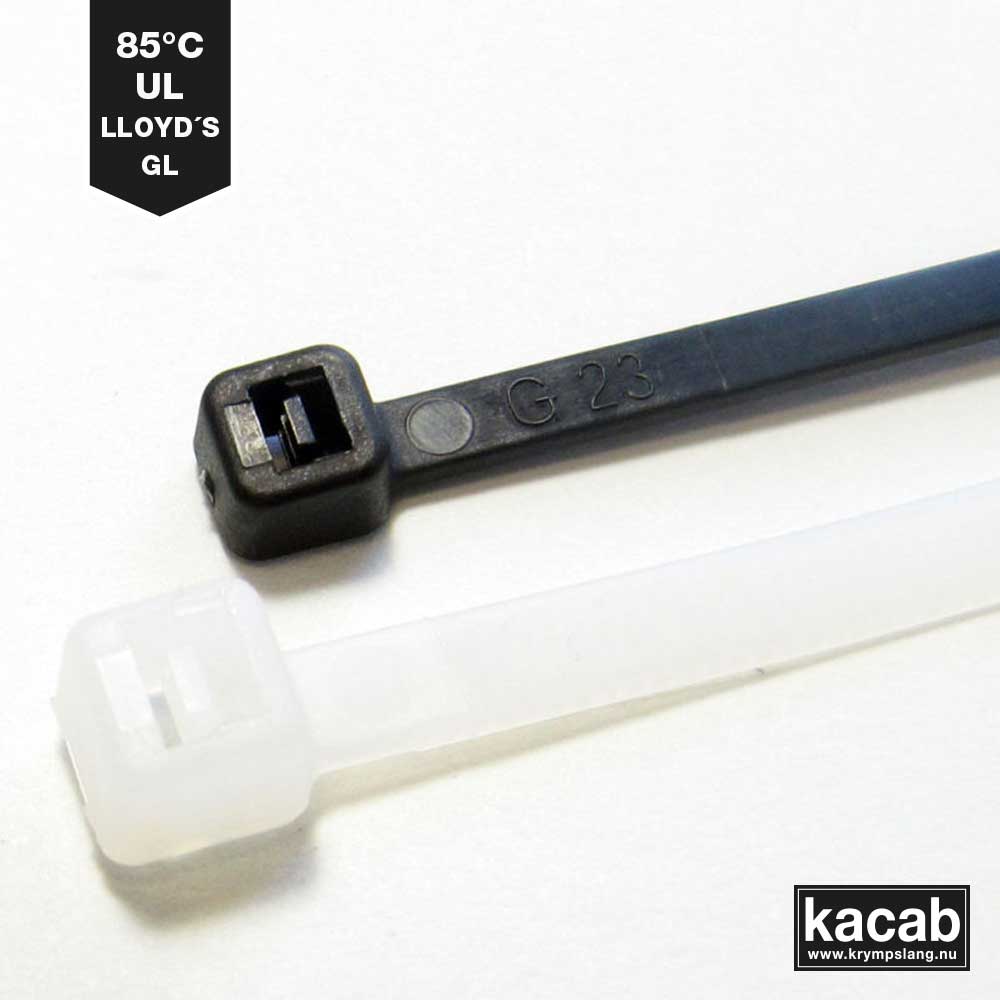
ATIE Standard cable tie
Features:
Material: Polyamide 6.6
Color: Transparent / black (UV resistant). Other colors available on request
Temperature range: -40 °C up to +85 °C
Flammability: UL 94 V2 (V0 available)
Certification: UL, Lloyd’s, GL 59425-08HH


Cable ties guide – Cable ties are very useful in many different contexts where you want to fasten, hold together or close something. There are also a variety of different types and materials of cable ties that are suitable for different purposes.
To choose the right cable tie for the right application, there are a few things to consider.
For example, choose black cable ties when using them outdoors. These bands are UV-stabilized and withstand the effects of the sun much better than natural bands.
If you want to use the tape in environments where there are other factors such as high temperatures, pollutants, chemicals, etc., you can choose a tape in another material. Examples of this can be Polypropylene, Tefzel, Stainless steel etc.
When choosing cable ties, you should ask yourself the following questions:
Length How long does the cable have to be to reach around what I want to bundle?
Strength Is any special tensile strength required on the belt? Should it hold something heavy?
Environment Should the cable tie be in a particularly exposed environment? Outdoors (UV rays) or it will be exposed to chemicals
Temperature What is the ambient temperature at the place where the tape should sit?
Handling of cable ties
The quality of a cable tie depends on a number of surrounding factors. In part, the most commonly used material is Polyamide 66 (PA66) hygroscopically, which means that it absorbs and releases water. This in turn means that the cable tie is differently flexible at different water contents. In order to always have as good a cable tie as possible, it is important to store these in a suitable way. It is especially important not to leave an opened bag for a long time without using the straps. In addition, there is the risk that the water will disappear out of the bands and they can be perceived as more inflexible. This is especially true during the cold season.
Some storage tips!
Always store the cable ties in a sealed plastic bag.
Do not expose the ties to direct sunlight.
Finally, do not place the tapes too close to direct heat sources (elements).


